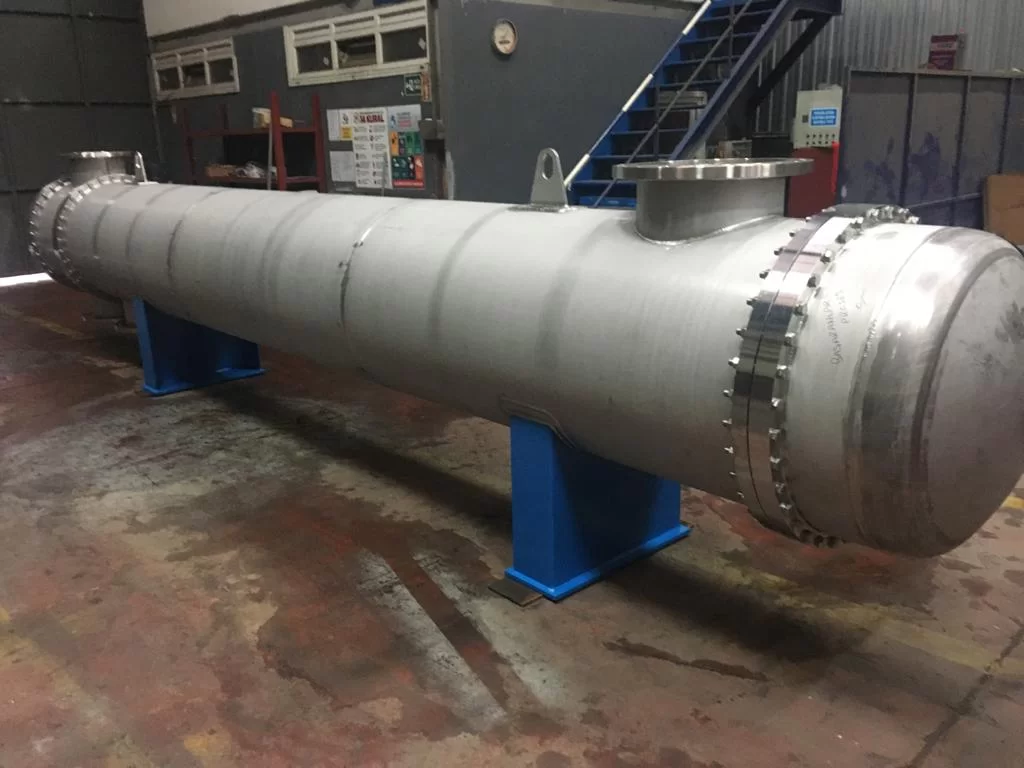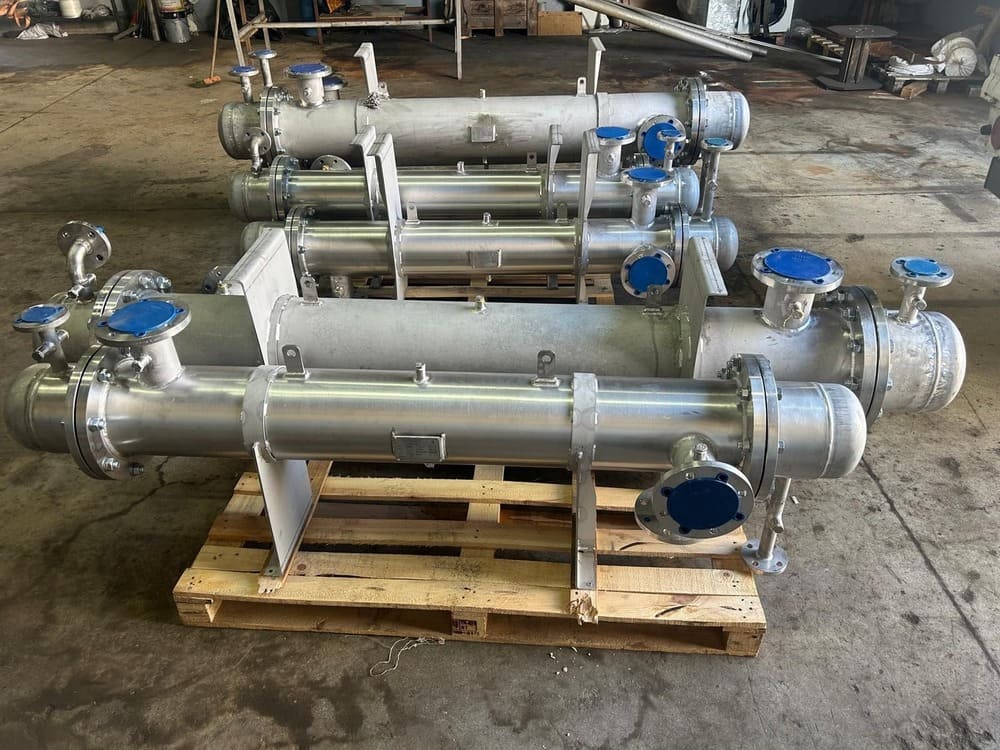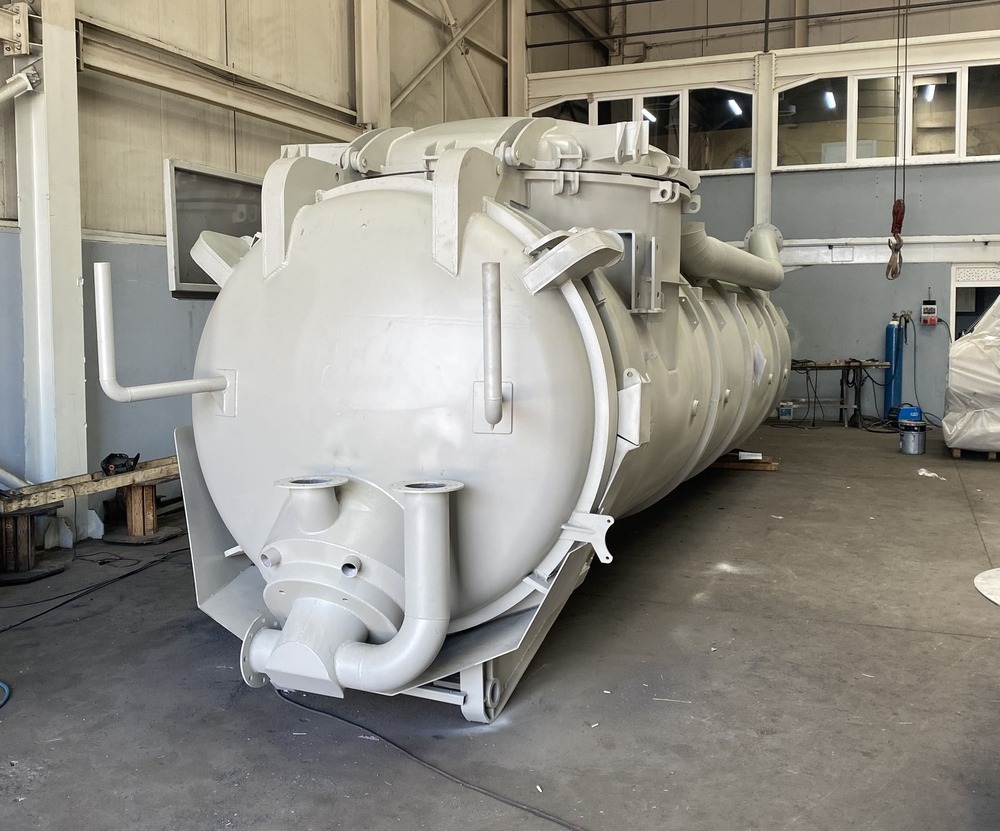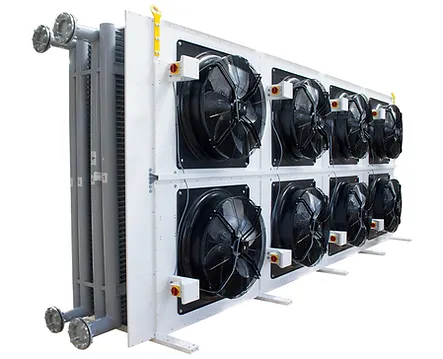

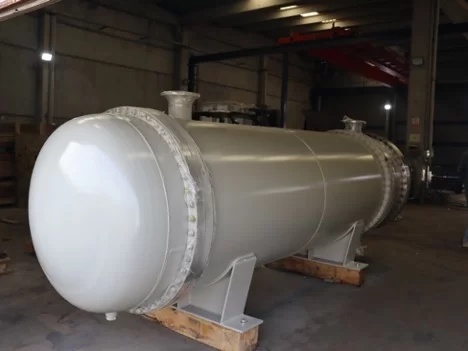
Shell And Tube Heat Exchanger
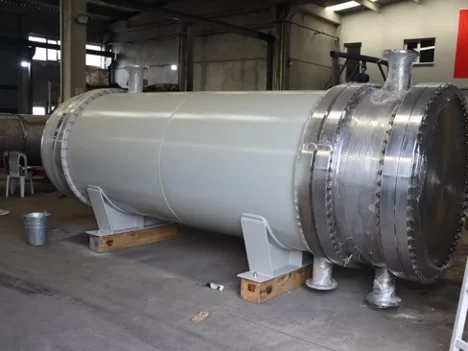
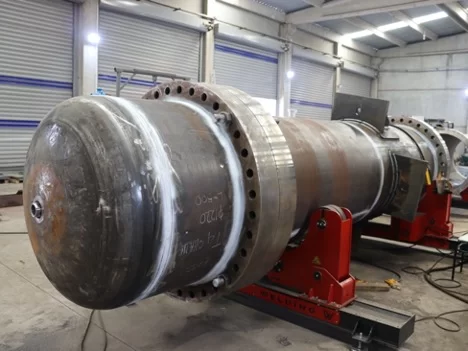
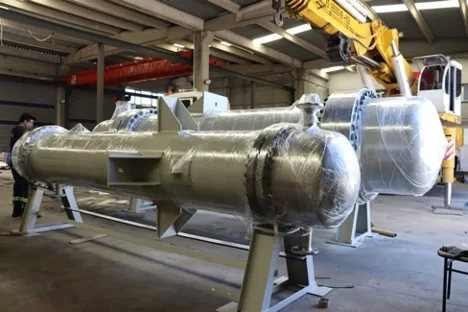
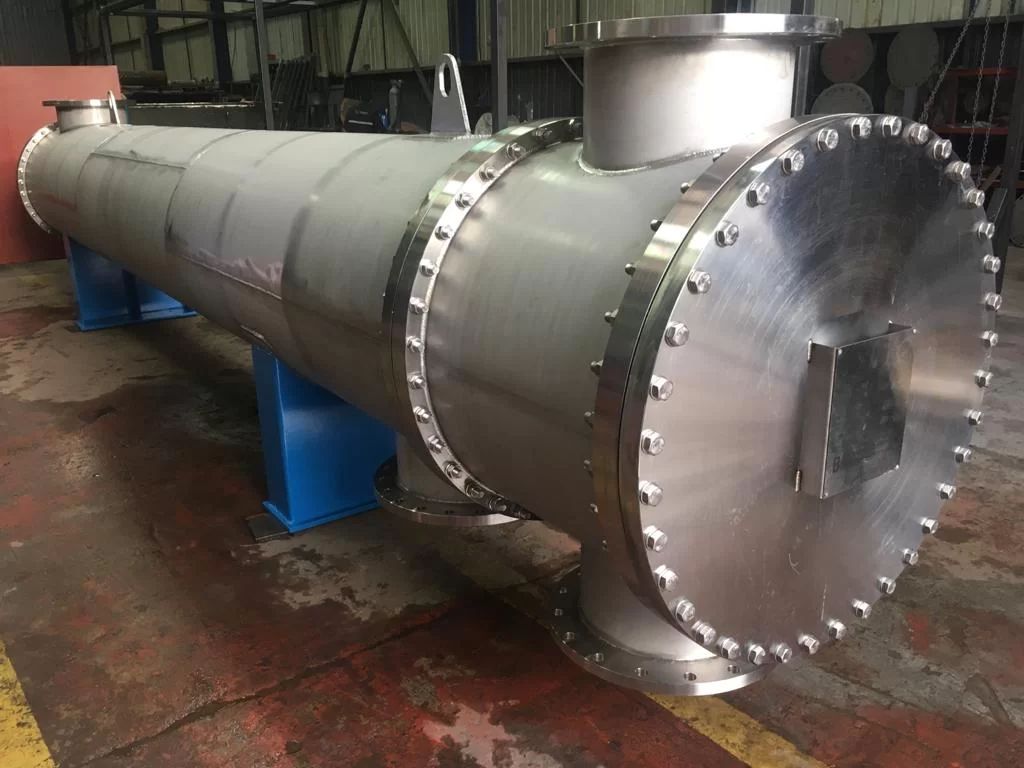
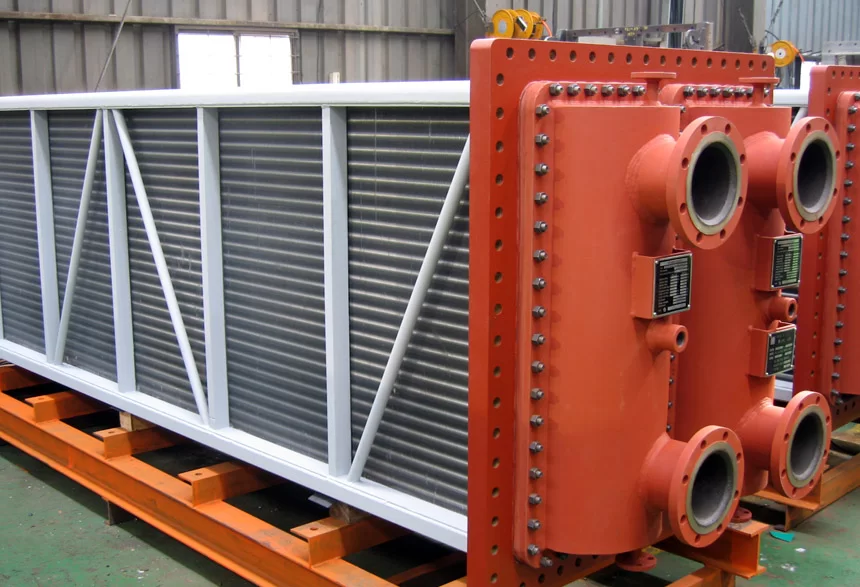
Basaranlar Process has been providing both standard and custom shell & tube heat exchanger to our industrial customers. Our reputation for high quality and fast lead-times have earned the trust of many top companies in the chemical, pulp/paper, waste water, military, power, renewable energy and refining markets.
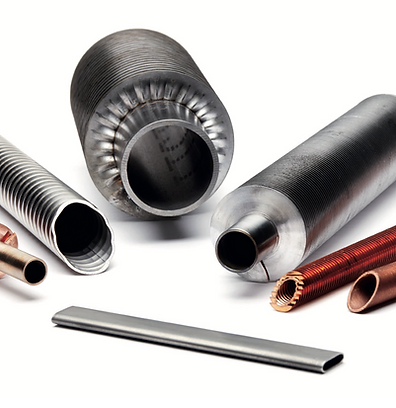
Shell and tube heat exchanger consists of plain tube or finned tube to increase the thermal performance.
The fluid can be either liquid or gas, and one of each flows into the tube and the other flow out of the tube is used to boil, condense or cooling the fluid. Basaranlar Process have experience on special material such as Stainless steel, Clad Steel, Super Duplex Stainless steel, Titanium, Copper-Nickel.
Basaranlar Process have various experience on producing of shell and tube heat exchanger according to major code and standard such as ASME, TEMA, API, AD- MERKBLAATTER, EN 13445, PED 2014/68/AB and also have experience on local regulation around world such as PED, DOSH, METI and CSA.
Our experienced engineers use up-to-date software ( HTRI ) to produce reliable results. Each calculation is evaluated using at least 2 renowned software packages to ensure the highest quality of output results and to provide greater security.
- Steam heat exchangers
- Sea, river, cooling tower water heating and cooling heat exchangers
- High pressure-low pressure heat exchangers
- Hot oil heat exchangers
- Biogas dehumidification heat exchangers
- Heat exchangers for waste heat and water heating
- CO2-NH3 heat exchangers
- Air heating and cooling exchangers
- Natural gas, methane, butane, pentane, hydrocarbon heat exchangers
- Garbage water heating and cooling heat exchangers
- Sludge heating and cooling exchangers
Our shell and tube heat exchangers are designed to satisfy the rigid requirements of the toughest industries, including:
- Pharmaceutical
- Chemical
- Petroleum
- Petrochemical
- Steel / Metals
- Food & Beverage
- Rendering
- Power / Utilities
- Renewable Energies
shell and tube Heat Exchanger Standards
- EN13445 standard
- ASME VIII code
- TEMA standard
- API 660
shell and tube Heat Exchanger Quality Assurance
Leak Testing
Pressure Testing
QC Stamps on all welded / processed material
Liquid Penetrant Testing
Magnetic Particle Testing
Certified Welding Inspection
Certified Radiographic Interpretation
NACE Coating Inspection
Multiple Integrity Tests Performed On All Exchangers
What is a Shell and Tube Heat Exchanger?
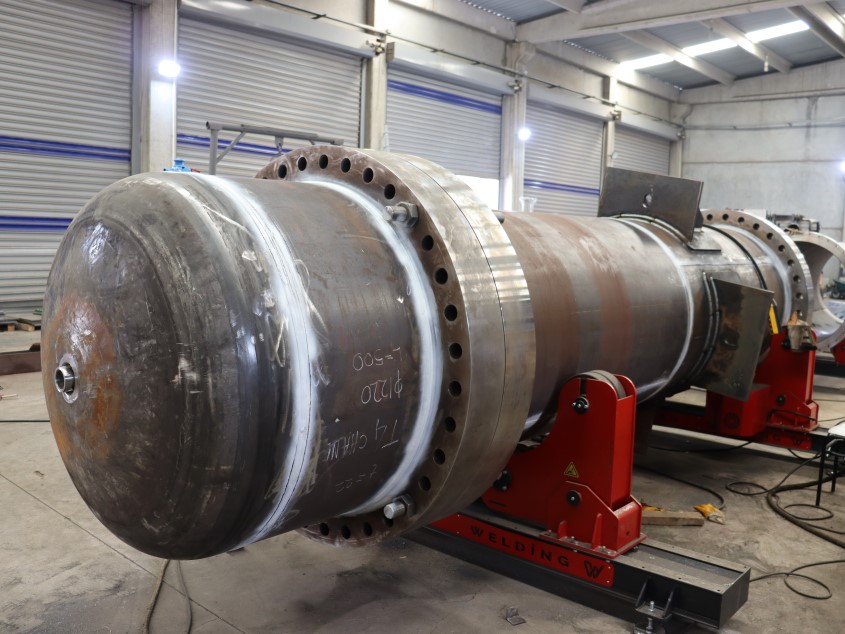
A shell and tube heat exchanger consists of many tubes mounted inside a cylindrical shell. The figure shows a typical tube heat exchanger that might be used in a petrochemical plant. Two fluids will exchange heat, one fluid flows outside the tubes, while the second fluid flows inside the tubes. Fluids can be single or two phase and flow in parallel or cross/counterflow arrangement.
The shell and tube heat exchanger consists of four main parts:
Front Channel (head or collector): This is where the fluid enters the tube side of the heat exchanger.
Back Channel, (head or collector): This is where the tube-side fluid leaves the exchanger or returns to the front channel in exchangers with more than one passage on the tube side.
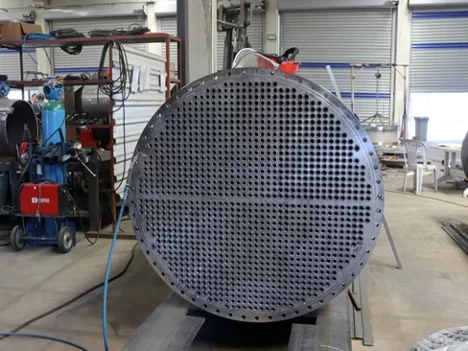
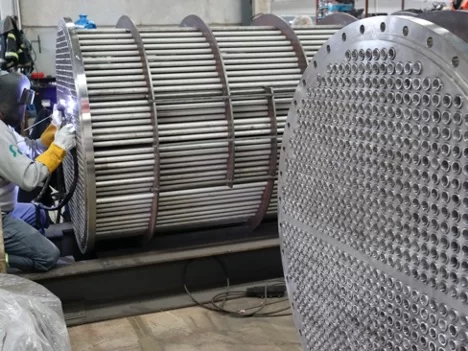
Tube bundle — this consists of tubes, tubesheets, baffles, and tie rods to hold the bundle together.
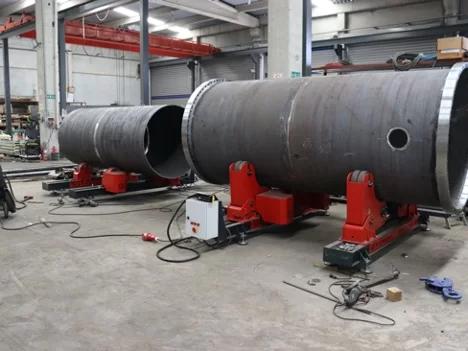
Shell: contains the tube bundle. The other fluid enters the body part, if there is a baffle, it moves between the baffles and leaves the shell.
Fixed Tubehseet Tube Heat Exchanger BEM, AEM, NEN

Fixed Tubehseet Shell and Tube Heat Exchanger Advantages
It provides maximum heat transfer area for a given shell and tube diameter.
Provides single and multiple tube passages to ensure optimal flow rate.
Less costly than removable tube bundle designs.
Fixed Tubehseet Shell and Tube Heat Exchanger Disadvantages
The casing side/outside of the tubes is not accessible for mechanical cleaning.
There is no design to allow differential thermal expansion between the tube and shell side. This expansion can be solved with a suitable compensator placed on the body side.
Floating Tubesheet Shell and Tube Heat Exchanger, AEW, BEW, BEP, AEP, AES, BES
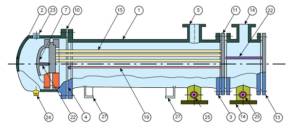
Floating Tubesheet Shell and Tube Heat Exchanger Advantages
The floating Tubesheet design enables differential thermal expansion between the shell and the tube bundle.
Both the tube bundle and the casing side can be inspected and mechanically cleaned.
Floating Tubesheet Shell and Tube Heat Exchanger Disadvantages
To mount the floating Tubesheet cover, it is necessary to bolt it to the Tubesheet. The bolt circle requires the use of space where a large number of tubes can be placed.
Tubes cannot expand independently, so applications of large thermal shock should be avoided.
U-Tube type Shell and Heat Exchanger BEU, AEU
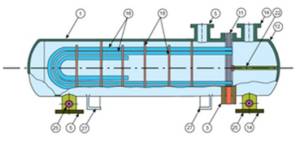
U-Tube Heat Exchanger Advantages
U-Tube design allows differential thermal expansion between shell and tube bundle
At the same time, each tube can expand independently of the other tube.
Both the tube bundle and the shell side can be inspected and mechanically cleaned.
They are more cost-effective than the floating head design.
U-Tube Heat Exchanger Disadvantages
Some tubes may be skipped in the center of the pipe bundle due to U-bend.
Due to the U-bend, the tubes can only be cleaned by chemical methods.
Due to the intertwined assembly of bent tubes, individual tubes are difficult to replace.
Single tube pass or true countercurrent flow is not possible.
The tube wall thickness in the U-bend is thinner than in the straight section of tubes.
When the head is in a vertical position with the side facing up, it is difficult to drain the remaining fluid inside the piping circuit.
Lorem ipsum dolor sit amet, consectetur adipiscing elit. Suspendisse varius enim in eros elementum tristique. Duis cursus, mi quis viverra ornare, eros dolor interdum nulla, ut commodo diam libero vitae erat. Aenean faucibus nibh et justo cursus id rutrum lorem imperdiet. Nunc ut sem vitae risus tristique posuere.
Lorem ipsum dolor sit amet, consectetur adipiscing elit. Suspendisse varius enim in eros elementum tristique. Duis cursus, mi quis viverra ornare, eros dolor interdum nulla, ut commodo diam libero vitae erat. Aenean faucibus nibh et justo cursus id rutrum lorem imperdiet. Nunc ut sem vitae risus tristique posuere.